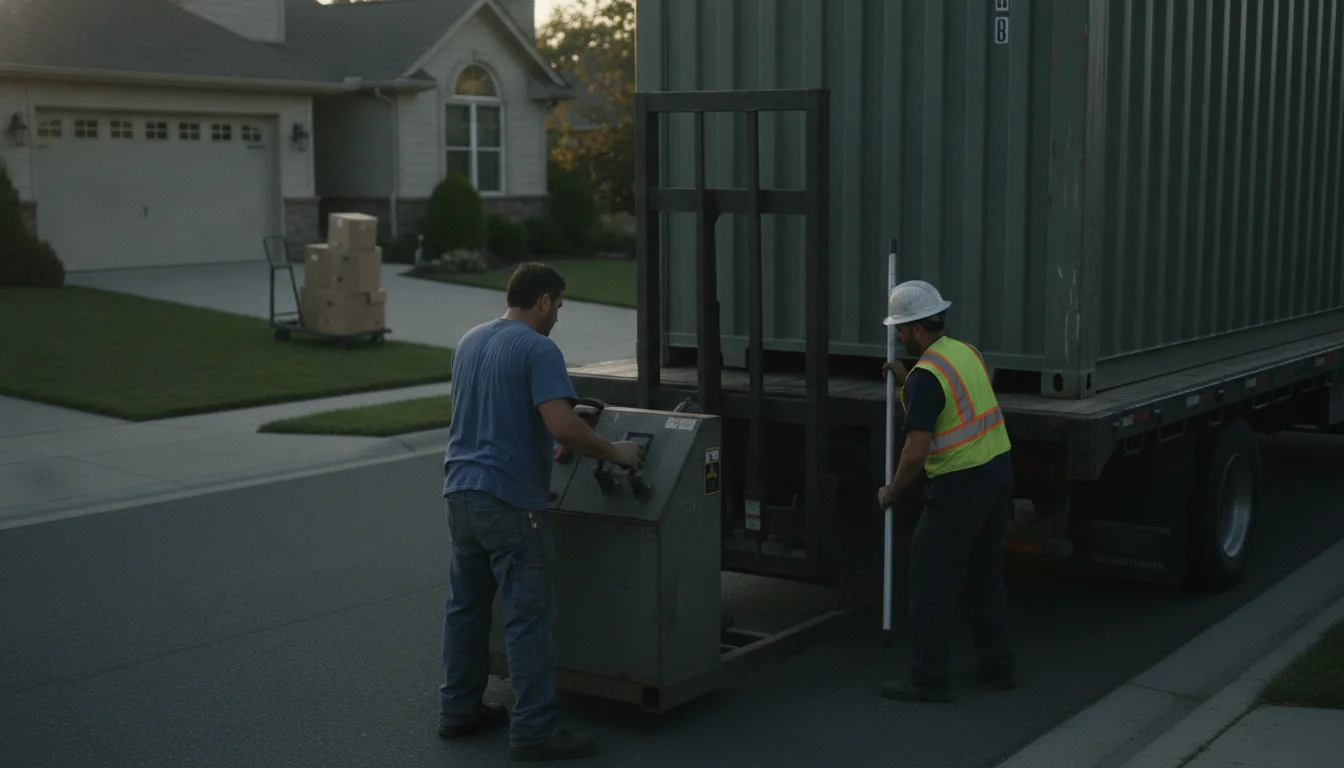
Moving containers are delivered to your home, loaded at your pace, and picked up for storage or delivery. That is the simple answer to “how do moving pods work.” A driver places the unit, you pack and lock your items, and the container travels to your next address or a storage center.
You might finish packing after work, one room at a time. The container stays in your driveway, so there is no truck clock or rush up a ramp. This gives homeowners, tenants, and business owners more control over moving day.
Table of Contents
- What is a moving container and how does it differ from a truck?
- How do moving pods work from delivery to pickup?
- Where can a container be placed at your home or business?
- How long do you get to load and what packing strategy works best?
- How is the container transported and kept safe in transit?
- What does a container move cost and what affects the price?
- When should you choose a container vs. hiring movers with a truck?
- Frequently Asked Questions
- Key takeaways
- Conclusion
What is a moving container and how does it differ from a truck?
A moving container is a storage box that a company brings to your home or office. It sits at ground level while you load it. The company then moves it to your new address or a storage site. A moving truck is a vehicle that you or a crew load and drive, often on the same day.
Containers give you more time and flexible dates. Trucks are better when you want the move done in one push. Container sizes and weight limits differ by company and route. Check the exact size, weight limit, and allowed items before booking.
The space needed is also different. Containers need a flat, clear area with enough room for a lift system. Trucks need safe space to park and a path for a ramp or liftgate. If stairs, long walks, or a tight elevator make truck loading hard, ground-level loading may be easier.
A container may suit you if you want to load over several days, need short-term storage, or have a gap between homes. It can also help if you do not want to drive a large truck. If you need same-day service or help with complex furniture, a truck with Local Movers may be the better choice.
Common sizes, weight limits, and access needs
- Sizes and limits: Pick a size that fits your rooms and heavy items. Follow the weight limit to avoid delays.
- Access: Plan for driveway space, clear branches, overhead room, and a path to the door.
- Security: Add your own lock and keep the key safe on both ends of the move.
When a container is the smarter choice than renting a truck
- You want several flexible loading days.
- You need storage between two homes.
- You do not want to drive a large truck.
- Your property works better with ground-level loading.
How do moving pods work from delivery to pickup?
The process is simple. First, choose a container size and delivery dates. The company brings the unit and sets it in an approved spot. You add a lock, load your belongings, and schedule pickup when ready. The container then goes to your new home or a storage center.
A usual schedule has a few clear steps. Delivery and placement happen first. You may load for several days or longer, depending on your agreement. On pickup day, the driver returns, checks the placement, and takes the locked unit away. Long trips may take several days, while storage can last for weeks or months.
On collection day, keep the area open for the driver. Remove tools, ramps, and loose items from the container. Check that the lock is closed and that your placement rules still apply. Keep pets indoors and have any street permit ready.
Prepare before the pickup date. Finish most packing the day before. Label boxes by room and place the last items near the door. Wrap furniture pads tightly and tie each row so items do not move. If bad weather is expected, protect the path and keep covers nearby.
Typical delivery-to-pickup timeline and milestones
- The delivery window is confirmed and the unit is placed.
- You add a lock and begin loading.
- You check the rows, weight, and tie-downs during loading.
- You finish loading, clear the aisle, and check the lock.
- The driver picks up the container for storage or delivery.
What happens on collection day and how to prepare
- Finish packing and padding before the driver arrives.
- Remove ramps, tools, and loose items from inside.
- Confirm permits and placement rules are still valid.
- Keep the lock key ready for the container’s arrival.
Where can a container be placed at your home or business?
Driveways are often the easiest place for a container. They are usually flat, private, and close to the door. Street placement may be allowed, but it often needs a permit and safety cones. Apartment and office sites may use loading areas if the property rules allow it.
The driveway should be level, clear, and strong enough for the delivery truck. Look for low branches, wires, sprinklers, steps, and narrow gates. Leave room near doors and walkways. Street placement must follow local parking, traffic, and safety rules. PODS gives placement and permit guidance through its PODS placement guidance.
HOAs, landlords, and building managers may set more rules. Some limit how long a container can stay. Others require boards under the unit to protect pavement. Ask early so your dates can be approved before delivery.
If you are unsure about the site, send the provider clear photos. Include slopes, branches, wires, gates, and nearby parking. A simple drawing can also help. Good details help the driver place the unit correctly the first time.
Driveways, street placement, and permits
- Driveway first: A private, level driveway is often the simplest choice.
- Street rules: Check permit needs, cones, parking limits, and time limits.
- Building zones: Confirm delivery hours, dock space, and clearance before booking.
HOA, landlord, and building rules to check first
- How long the unit may remain on the property.
- Where it may sit and how the surface must be protected.
- Whether cones, covers, or other safety items are required.
How long do you get to load and what packing strategy works best?
Many providers give you days or weeks to load. This makes it easier to work one room at a time. Start with large, heavy items on the bottom. Stack boxes by size and weight, then fill small gaps with soft goods.
Use a clear plan for how to pack. Begin early and label boxes on more than one side. Keep daily items out until the end. Use furniture pads to protect surfaces from dents and rubbing. Tie each row with straps or rope, and spread weight evenly from side to side.
Weather and security matter too. Rain, heat, and wind can slow the work. Keep plastic covers close by and lock the container after each visit. A puck lock with a hardened shackle can offer stronger security. Do not load beneath a raised door during high winds.
Protect floors and walls inside the home. Cardboard or floor runners can shield walkways. Corner guards help around tight turns. Remove a door if needed to move a large sofa. For steep stairs or heavy items, Loading & Unloading Help can make the job safer.
Loading order, tie-downs, and weight distribution
- Put heavy items low and near the center of the container.
- Tie each row so boxes and furniture stay in place.
- Leave a small aisle so you can reach and check the load.
Weather, security, and protecting floors and walls
- Stage items under cover when rain is likely.
- Lock the unit after every loading session.
- Use cardboard, runners, and corner guards around the home.
How is the container transported and kept safe in transit?
Many providers use level-lift systems. These systems raise and set down the container without a steep tilt. That helps reduce sliding and hard movement. Drivers also plan routes that fit the container’s height, weight, and size.
Packing has a big effect on ride quality. Use padding, tight rows, and even weight. Think of the container as a room that will move. Loose gaps let items shift, while firm rows and tie-downs help hold them in place.
Normal household goods, boxed items, and dry furniture are usually allowed. Hazardous, leaking, or flammable items are usually banned. Common examples include fuel, paint thinner, and propane. Read the provider’s agreement and ask before loading anything uncertain.
For a long move, the container may go to a local center between trips. It stays locked while stored, and you keep the key. When the move continues, the unit goes back on a truck and travels to the final address.
Lift systems, ride quality, and handling
- Level-lift pickup and set-down can help protect your load.
- Careful driving can reduce bumps and movement.
- Even weight, padding, and tight packing are key.
What’s allowed inside—and what isn’t
- Allowed: dry furniture, boxed goods, and non-perishable items.
- Not allowed: fuel, chemicals, guns, live plants, or other banned items.
What does a container move cost and what affects the price?
The cost of a container move depends on size, distance, season, and dates. A package may include delivery, time on site, pickup, transport, and storage. The actual price depends on the job and is confirmed when you get in touch.
Local moves often involve delivery and pickup within one area. Long-distance moves may include more travel legs and handling. Storage time can add monthly fees, while extra days may add more charges. Street permits, rushed delivery windows, and failed delivery attempts can also affect the total.
You can help control the cost with good planning. Choose dates with less demand when possible. Pick the smallest container that truly fits. Pack items tightly so you need fewer units. Confirm placement rules before delivery to avoid a second trip. If you need muscle without a truck, Loading & Unloading Help may fit your plan.
Other possible add-ons include locks, moving blankets, straps, and extra time. Some providers rent these items, while others ask you to supply them. A narrow or low site may also need a site check. Read each term before you book so the moving estimate is clear.
Local vs. long-distance pricing factors
- Local: fewer travel legs and a shorter route within one area.
- Long-distance: more handling, longer travel, and changing demand.
Add-ons, fees, and practical ways to save
- Confirm permits and access to help prevent another delivery trip.
- Pack tightly so you may need fewer containers.
- Load on less busy days when your schedule allows.
When should you choose a container vs. hiring movers with a truck?
Choose a container when you want more loading time, need storage, or have a gap between homes. It can also work well during a home sale or office remodel. You can lock the unit each night and unload after you receive the keys. You also avoid driving a rental truck.
A full-service crew with a truck may be better when speed matters. Apartments with stairs, tight elevators, or short building windows often need Apartment Movers. Offices with sensitive equipment may need Commercial & Office Movers. Heavy or unusual pieces may be safer with Furniture Movers.
You can combine both choices. Movers can handle heavy items while you pack smaller boxes later. At the new home, a crew can unload large pieces first. This hybrid plan gives you help where you need it while keeping control of the rest.
For a move in Hot Springs, list your dates, site details, and building rules. Then compare them with the options below. This simple moving checklist can help you choose before booking.
Scenarios where a full-service crew wins
- Tight access, many stairs, or long carries.
- Fragile, heavy, or high-value items.
- Strict building windows and loading dock rules.
Hybrid options that combine containers and movers
- Movers handle heavy items while you load boxes later.
- Movers unload large pieces first at the new home.
Frequently Asked Questions
How long can a moving container stay at my home?
Many providers allow several days or weeks on site. Extra time may be available if the schedule allows it. Ask about street permits when the unit sits at the curb. Try to finish loading at least one day before pickup.
Can I put a container on the street in Hot Springs?
Sometimes, but local rules control the answer. A permit, cones, or other safety items may be needed. Check with the city or ask the provider before delivery. Approval ahead of time can help prevent delays and neighbor problems.
What is the best way to pack dishes and bowls?
Wrap each piece in paper and use soft fill between layers. Stack dishes upright with padding around them. Put bowls in a strong box with space between layers. Mark the box “Kitchen – Fragile.” Keep these boxes low and secure the row.
Are there well-reviewed movers in Hot Springs I can hire to help load?
Yes. Look for clear policies, strong reviews, and careful work. Ask about Loading & Unloading Help if you want a crew to handle heavy items while you pack the rest. This hybrid choice can protect your back and your belongings.
How do moving pods work for long-distance moves?
The basic process stays the same. The container is loaded, picked up by a lift truck, and sent to a local center or the next route. Travel time depends on distance and demand. You keep the key and unlock the unit when it arrives.
Key takeaways
- Containers give you time and storage, while trucks focus on speed.
- Placement rules matter. Check driveways, permits, and property rules early.
- Pack tightly and tie each row to help protect items during travel.
- Check banned items before placing anything inside the container.
- Hybrid plans work well when you need help with heavy lifting.
Conclusion
Moving containers are simple when you plan the site, loading time, and pickup date. Check local rules before delivery. Pack tightly, balance the weight, and keep the unit locked. Decide if you want to do the work yourself, hire a crew, or use both options.
Hot Springs homeowners, tenants, and business owners can use these steps to avoid delays. Hot Springs Arkansas Movers can help you think through the choice between a container, a truck, and a hybrid plan. The Get in touch page has details for planning your next move.
If you are not sure what you are dealing with, it is worth having someone look at it before it turns into a bigger job. Get in touch with Hot Springs Arkansas Movers today and we will tell you where you stand.